Tony Landry
The Cuckoo's CallingTony Landry, uncle to Lula Landry and John Bristow, is both a witness in the investigation and a concealed link in its family history. Lula called him repeatedly on the day she died, while his account of where he had been on the preceding day proves entangled with an affair involving Cyprian May’s wife. His significance lies less in guilt for Lula’s death than in what he knows about John: as a boy, John had pushed Charlie Bristow to his death, and Tony had seen the aftermath and suspected him. Years later, fear and compromised loyalties have kept that knowledge from being spoken plainly.
Identity and family position
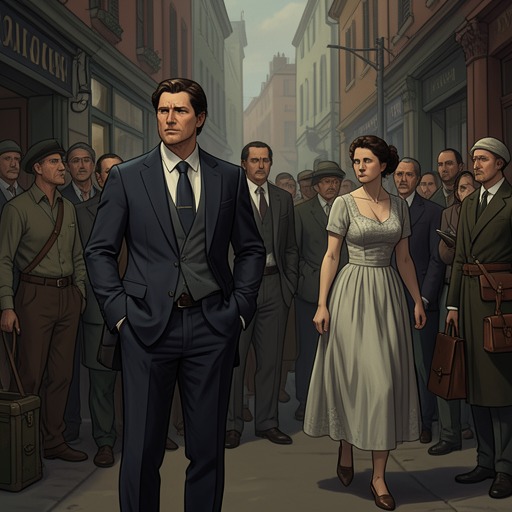
Tony is introduced by Cormoran Strike as John and Lula’s uncle. He is a lawyer, and his professional connections bring him into the investigation from more than one direction: his firm handles Tansy Bestigui’s divorce, while his attendance at a legal conference in Oxford becomes a point Strike wants independently checked. Tony is therefore neither a distant name in the family tree nor a neutral source. He has access to the people and circumstances surrounding the case, but his own interests complicate what he tells the detective.
His relationship with Lula is marked by a sharp disagreement over who had the right to claim her as family. After her death, Tony told her birth mother, Marlene Higson, that she was not Lula’s mother and that Lady Bristow was. Marlene recalled Tony threatening her when she tried to attend the funeral, saying that her contact with the press was causing distress. She answered that she had given birth to Lula. Their confrontation shows Tony acting as a gatekeeper between Lula’s biological and adoptive families, defending the Bristows’ claim even when it meant denying Marlene’s maternal standing.
Lula’s final calls and the investigation
The telephone records make Tony an important, initially unexplained part of Lula’s last day. Lula barely used her landline during the week before her death and did not use it at all the day before; on the day she died, however, she made sixty-six calls from her mobile. After a morning call to Evan Duffield and another to Ciara Porter, she began, at 1:21 p.m., repeatedly calling two numbers, almost alternately. One belonged to Evan; the other, identified in the annotated records as Tony’s, received call after call, with short pauses before Lula started dialling again.
Strike asks Tony directly about the calls after establishing that Lula had repeatedly telephoned his mobile once she left Lady Bristow’s flat. The record establishes the pattern but does not, in the available account, disclose what Tony said to Lula or why she was trying to reach him. Strike later asks whether there could be a reason she called her uncle so persistently that day. The unanswered question remains distinct from the eventual revelations about Tony’s movements: it makes his connection to Lula’s last hours significant without resolving it into a known conversation.
Lula had also sought a meeting at her flat for the early hours after the day she visited Marlene. At a changing cubicle in a Notting Hill shop, she made a call asking someone to meet her; a shop assistant overheard it through the curtain. This establishes that Lula was trying to arrange a private encounter, but it does not identify Tony as the person she called. The distinction matters: his number figures in the calls she made on the day of her death, while the earlier plea for a meeting is a separate clue whose recipient is not specified in the evidence presented here.
Oxford and the concealed affair
Tony said that he had seen Lula on the day she died and had visited Lady Bristow alongside her the previous day. He described Lula as seeming normal. He then reported driving to Oxford for a conference on international developments in family law and spending the night at the Malmaison Hotel Oxford. Strike found the account’s comments about telephone calls difficult to understand and turned to the phone records for clarification; he also focused on whether Tony had in fact been at the Oxford conference on 7 January.
Robin Ellacott checked the conference with the Law Society, pretending to be someone Tony had met there who had lost his card. Her inquiry confirmed that Tony had attended, but attendance alone did not establish where he had been throughout the relevant day. Later, Strike asks why Cyprian May had sent someone to Oxford to find Tony on 7 January. The question points toward a second purpose behind the Oxford story: Tony had to explain his whereabouts while concealing that he was staying in a hotel with Cyprian May’s wife.
Strike’s reconstruction identifies the pressure behind Tony’s lie. Tony had needed to appear somewhere other than with May’s wife, so he said he had doubled back to London to visit his sick sister. He then realized that both he and John were supposedly at the house at the same time. John, in turn, claimed to have seen Tony through the study door without speaking to him. Strike reads the accounts as mutual cover: each man maintained a story while remaining too wary to challenge the other’s version. The Oxford conference thus becomes not a simple alibi but a misleadingly serviceable answer, supported by a real professional engagement while concealing an affair.
Knowledge of John’s past
Tony’s deeper importance emerges in Strike’s confrontation with John. Strike says Tony had been present when Charlie died at the quarry and had seen John cycling away after pushing his brother over the edge. He argues that Tony told John and Charlie’s parents what he suspected: that John had caused Charlie’s death. In Strike’s account, John’s father struck Tony, his mother fainted, and Tony was expelled from the house. The family’s remembered explanation—that Tony had accused the parents of raising delinquents—had obscured the more damaging accusation Strike believes Tony had made: that they were raising a psychopath.
This recollection changes the meaning of Tony’s position in the family. He had not merely witnessed grief after an accident; according to Strike’s reconstruction, he saw evidence of John’s responsibility and voiced his suspicion. Yet the truth did not become an open family reckoning. Tony remained close enough to be involved in later family affairs, while John continued to present a softened account of their relationship, telling Strike about an affectionate embrace and reconciliation with Lula. Strike calls that story false. Tony’s silence and John’s invented tenderness belong to the same network of omissions, though the evidence does not make Tony a participant in John’s later murders.
Strike also proposes why Tony may have delayed confronting John: he could tell himself that he would wait until John and Lula’s mother had died. Meanwhile, Tony asked Alison to keep an eye on John. This is not the same as openly exposing him; it suggests a guarded form of vigilance that leaves the family’s central accusation unspoken. Strike presents Tony as someone whose knowledge has survived, but whose response to it has been constrained by guilt, fear, and the consequences of speaking within the family.
Conflict, exposure, and narrative role
Tony’s behavior after Lula’s death extends the pattern of selective disclosure. He opposed Marlene’s claim to attend the funeral and resented her dealings with the press, while the media attention itself had made the family’s private history public. His own attempts to control the story do not make his suspicions about John false, but they show that he is not a transparent custodian of truth: he protects the Bristows’ boundaries, conceals his affair, and carries an accusation from the past without bringing it into the open.
Near the end of the investigation, Tony calls Strike three times. The calls follow John’s attempt to reach the detective and come amid John’s anger about Alison leaving him; the office’s report is that Tony had called John a stupid prick and was crying about Alison, apparently blaming Strike and threatening legal action over defamation. The episode places Tony’s private distress beside his earlier restraint. He is no longer only a source in Strike’s reconstruction of old events: the case has disrupted the guarded arrangements by which he and John had managed what they knew about one another.
Tony’s role is consequently defined by partial knowledge and compromised speech. He is a family witness whose recollection may illuminate John’s past, a relative Lula tried repeatedly to contact, and a man whose own alibi is built around concealing an affair. The investigation does not resolve the meaning of Lula’s calls to him in the material presented here, and it does not make him responsible for her death. Instead, it reveals the cost of his long silence about Charlie: the accusation was present inside the family, but was repeatedly displaced by safer explanations, until Strike reconstructed the buried conflict aloud.